

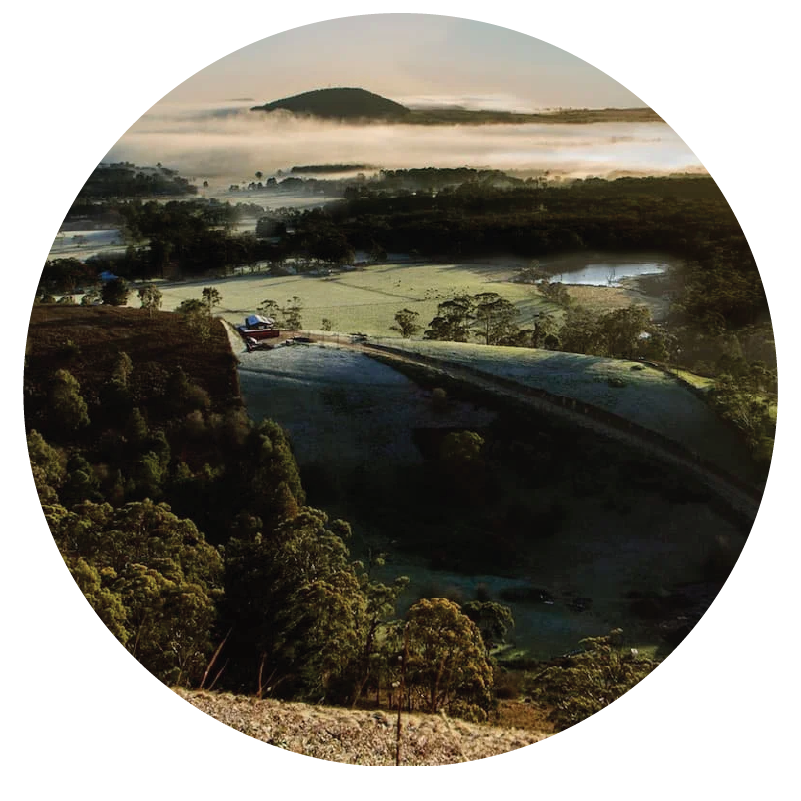
Meet Mt Buninyong, Australia's cleverest little ex-volcano.
Every can of Wallaby starts its life 120 km north-west of Melbourne, trickling down through the crater of a 745-metre sleeping giant. Here's the story of how a very old volcano makes a very good can of water.
745 m
Above sea level120km
NW of Melbourne~2 Million
Years dormant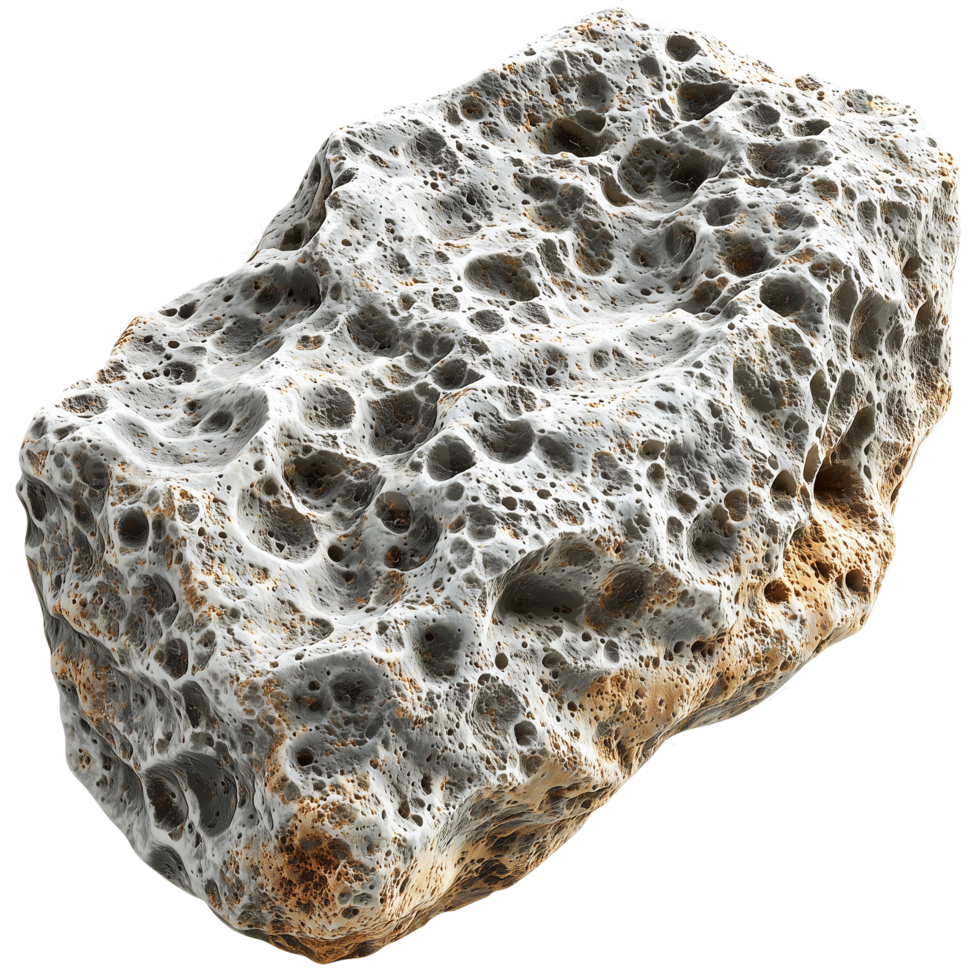
Born from rain, raised by rock.
Two million (give or take) years ago, Mt Buninyong went out with a bang — a proper fire-fountain eruption that left behind a deep crater and a whole lot of scoria: that's volcanic rock so porous it behaves like nature's finest sponge.
Today, the mountain sits quietly in the Central Highlands of Victoria — dormant, heritage-listed, and wrapped in native forest that's home to koalas, kangaroos, and a very healthy bird population. And every time it rains up there (which is often — trust us, it's wet), a small miracle gets going underground.
Rainwater soaks into the crater and begins the slow journey down through layers of ancient lava. The scoria strains out every last particle. The minerals that stone has been stewing in for millennia leach gently into the water. By the time it emerges as a spring at the base of the mountain, it's a perfectly balanced, naturally alkaline drink.
Minerals,
well sorted.
Naturally alkaline, naturally balanced, and shaped entirely by two million years of volcanic rock. Here's what's in every can — to the milligram.
Naturally
pH 7.5–8.0
-
Keeps the pH balanced:
The quiet star of the mineral profile. Bicarbonate is what makes Wallaby taste smooth and rounded rather than sharp or acidic — it's the natural buffer that gives good spring water its easy-drinking character. Picked up slowly as rainfall works its way down through the volcanic rock. -
Natural trace:
A small amount of chloride occurs naturally in every spring water on Earth — it's part of what makes water taste like water. At 44 mg/L you won't notice it on the palate, but it plays a quiet role in keeping the overall mineral balance steady. -
A pinch, not a shake:
Essential for hydration, unnoticeable on the palate. Firmly in low-sodium territory — which is exactly where a good spring water should sit. -
The unsung electrolyte:
Magnesium does more than it gets credit for — nerve function, muscle recovery, and the reason your legs stop twitching at 3am. Most Australians don't get quite enough of it from diet alone. A little extra in every glass is no bad thing. -
Another electrolyte:
Works alongside sodium to keep your fluid balance in check — the other half of the hydration equation. Usually found in bananas. Occasionally found in ex-volcanoes. -
Straight from the scoria:
As water trickles through the ancient lava, a gentle trace of calcium comes along for the ride. Not enough to replace a glass of milk — but a quiet structural contribution to bones, teeth, and the overall mineral character of the water. -
Sulphate:
At higher concentrations, sulphate gives mineral water a distinctive metallic tang — which is lovely in a European spa town, less so in a Tuesday afternoon can. At 9.3 mg/L, you get all the mineral balance and none of the taste. -
Medium-mineral:
TDS is the combined weight of everything naturally dissolved in the water — every mineral, every trace. At 310 mg/L, Wallaby sits squarely in the "balanced mineral" band: more character than soft rainwater, less intensity than a heavy European mineral water. The Goldilocks zone.
Tested, certified, and stubbornly transparent.
Wallaby is HACCP-certified (that's the global gold standard for food safety) and a proud member of the Australian Beverages Council. Every batch is independently tested against ABWI standards.
HACCP certified food safety system
NATA lab-tested inorganic & physical QA
Sealed on-site into infinitely recyclable aluminium
Nothing added. Nothing taken away. Just great spring water.